“Utah’s tallest response to COVID”
A once-empty office tower in the heart of Salt Lake City is now full of life, laughter and a bold new idea about what affordable housing can be.
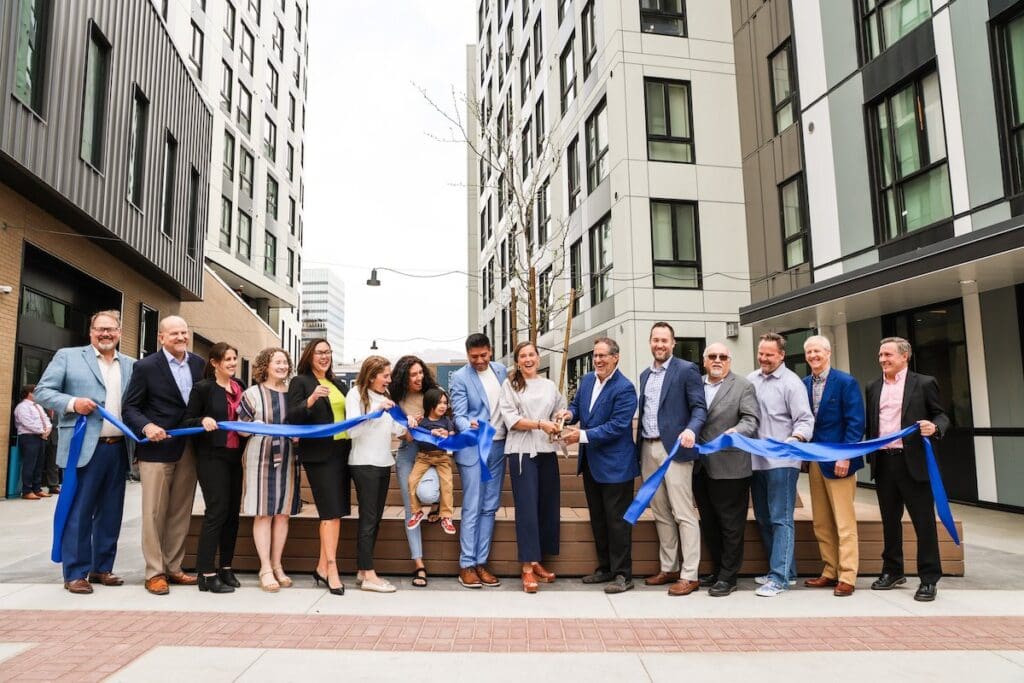
Local and national housing leaders gathered to cut the ribbon on Arbor 515, a 14-story adaptive reuse project that’s transforming the way people think about affordability, ownership, and opportunity.
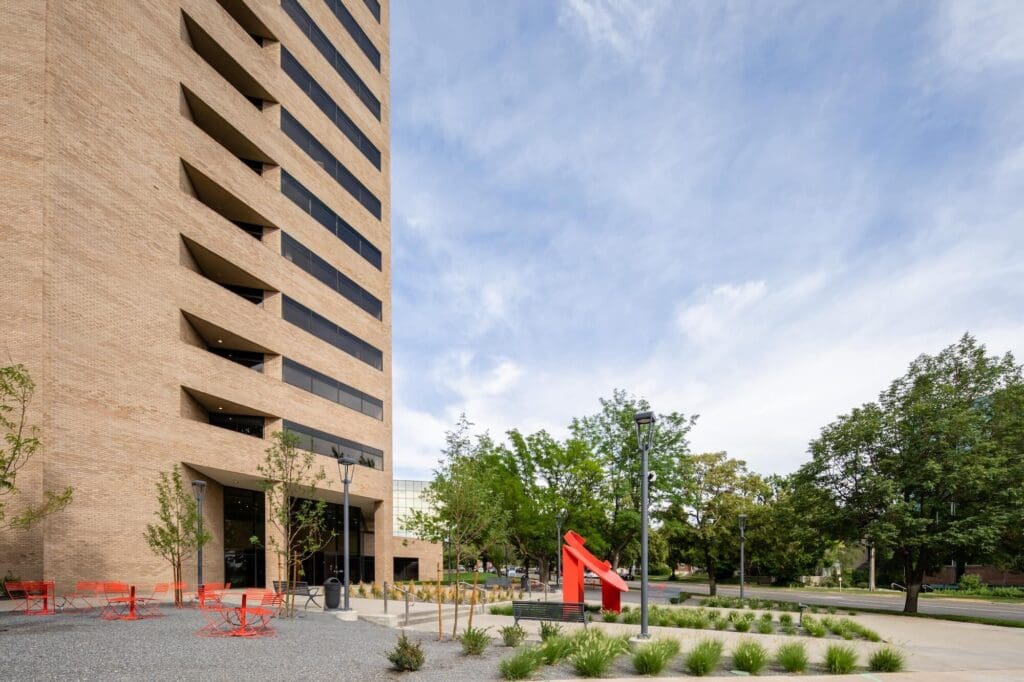
The former commercial tower at 515 East and 100 South has been converted into 96 affordable apartments. Instead of simply providing lower rents, the development offers something far rarer: a chance for residents to build equity while they rent.
Developed by the Perpetual Housing Fund of Utah, with significant funding from the CRA, Arbor 515 is the city’s first large-scale office to housing conversion and one of the first in the nation to incorporate a renter wealth-building model.
“Where families actually need it”
Standing in the crisp morning air, in what she calls the “eastern thumb of downtown,” Mayor Erin Mendenhall told the crowd that the project marks a new chapter for housing in Salt Lake City.
“This is happening close to transit, close to jobs, and right where families actually need it,” Mendenhall said. “I was raised by a single mother. We could’ve lost our housing over the course of several years of my childhood. That risk was always there on our horizon. Projects like Arbor 515 change that story for the next generation.”
The mayor called the building a “model for how we can turn affordability into stability and stability into equity.”
Turning renters into wealth builders
Under the Perpetual Housing Fund’s approach, residents earn financial credits through their rent payments that can later be applied toward a down payment or shared profits if the property is refinanced or sold. The model allows renters to start building savings and, hopefully, generational wealth in the midst of the nation’s homeownership crisis.
“During COVID, the average Utahn lost their ability to afford a home,” said Chris Parker, of GIV Group, who helped structure the project. “The average Salt Laker can afford zero of the homes in Salt Lake if they’re making the average income. That’s why we have to innovate.”
Breaking barriers and cycles
Governor Spencer Cox, who joined Mayor Mendenhall at the ribbon cutting, praised the development as an example of what collaboration and creativity can achieve.
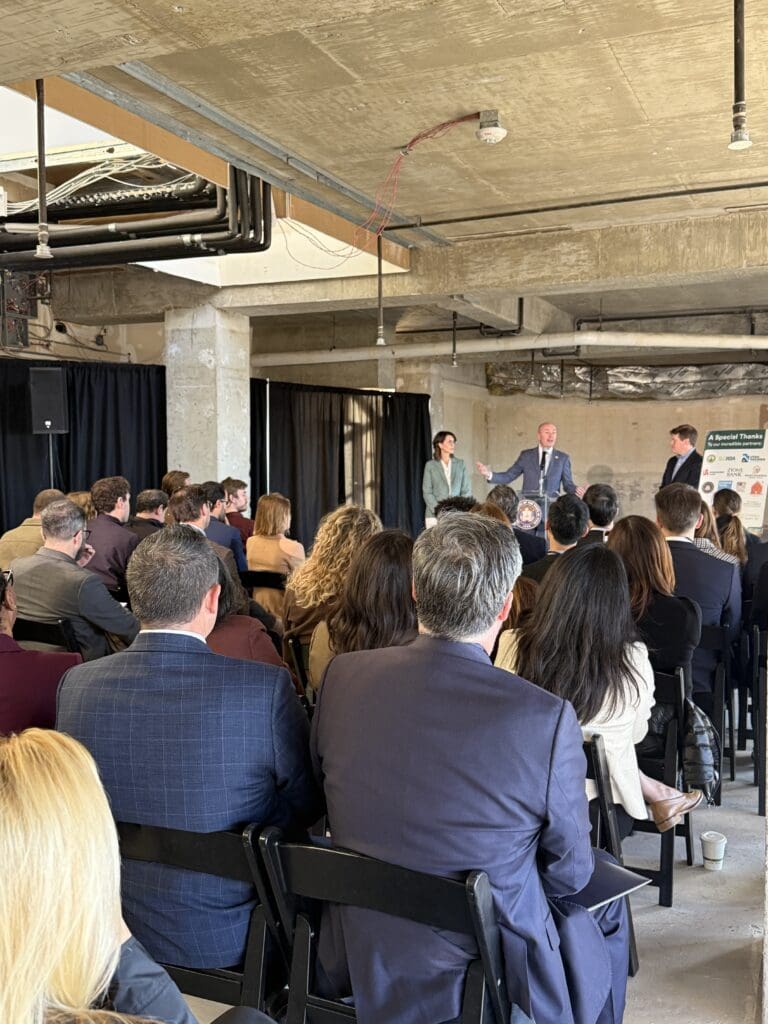
“The idea that we’ve been so focused on – not just helping people who are in poverty, but breaking the cycle of intergenerational poverty, that’s what these units have the opportunity to do,” Cox said.
Arbor 515 was made possible through an allocation of more than $12 million provided by the CRA, as well as funding from various other partners.
Designed for dignity and connection
Inside, Arbor 515 feels more like a new downtown residential tower than an office retrofit. Apartments range from studios to four bedrooms, featuring high ceilings, large windows, and modern finishes. Shared amenities include a fitness center, community lounge, and covered parking.
On the second floor, Pinyon Montessori, a micro-school serving children aged 3 to 12, brings a family-friendly touch to the building and serves as a reminder that housing and childcare are deeply linked.
More than a one-off
To close the event, Mayor Mendenhall announced that more than $14 million in new city funding is now available to developers to continue building on Arbor 515’s success through the Housing Development Loan Program and the Residential Wealth Building Program.
With construction complete and leasing nearly full, Arbor 515 stands as more than a repurposed building. It’s a vision for what’s possible when cities invest not only in homes, but in hope.
“When we create homes that build stability and equity,” Mendenhall added, “we’re not just investing in housing. We’re investing in people — in the possibility that the next generation of Salt Lakers will grow up with opportunity under their own roof.”