
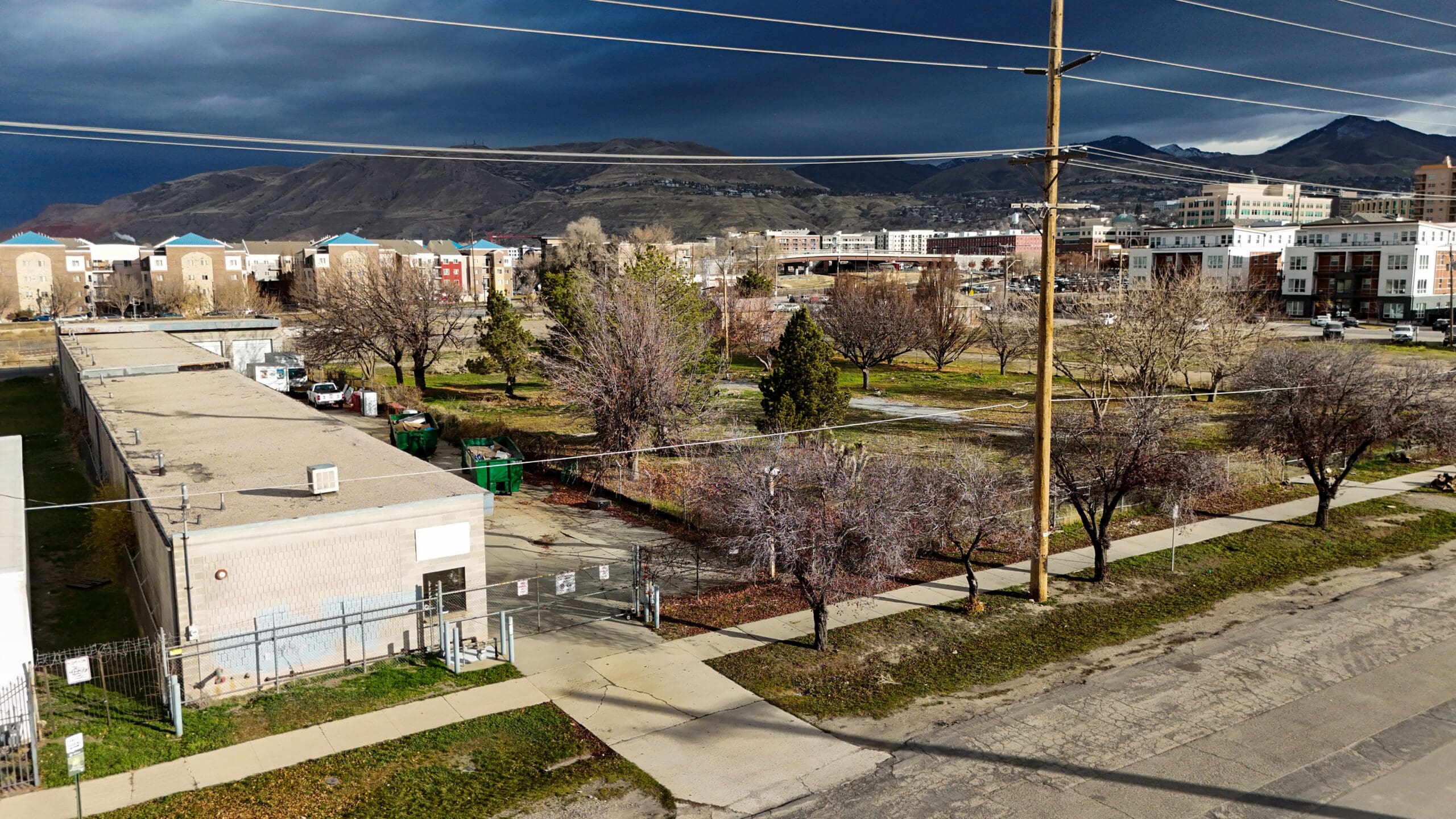
Parry Block
Property Overview
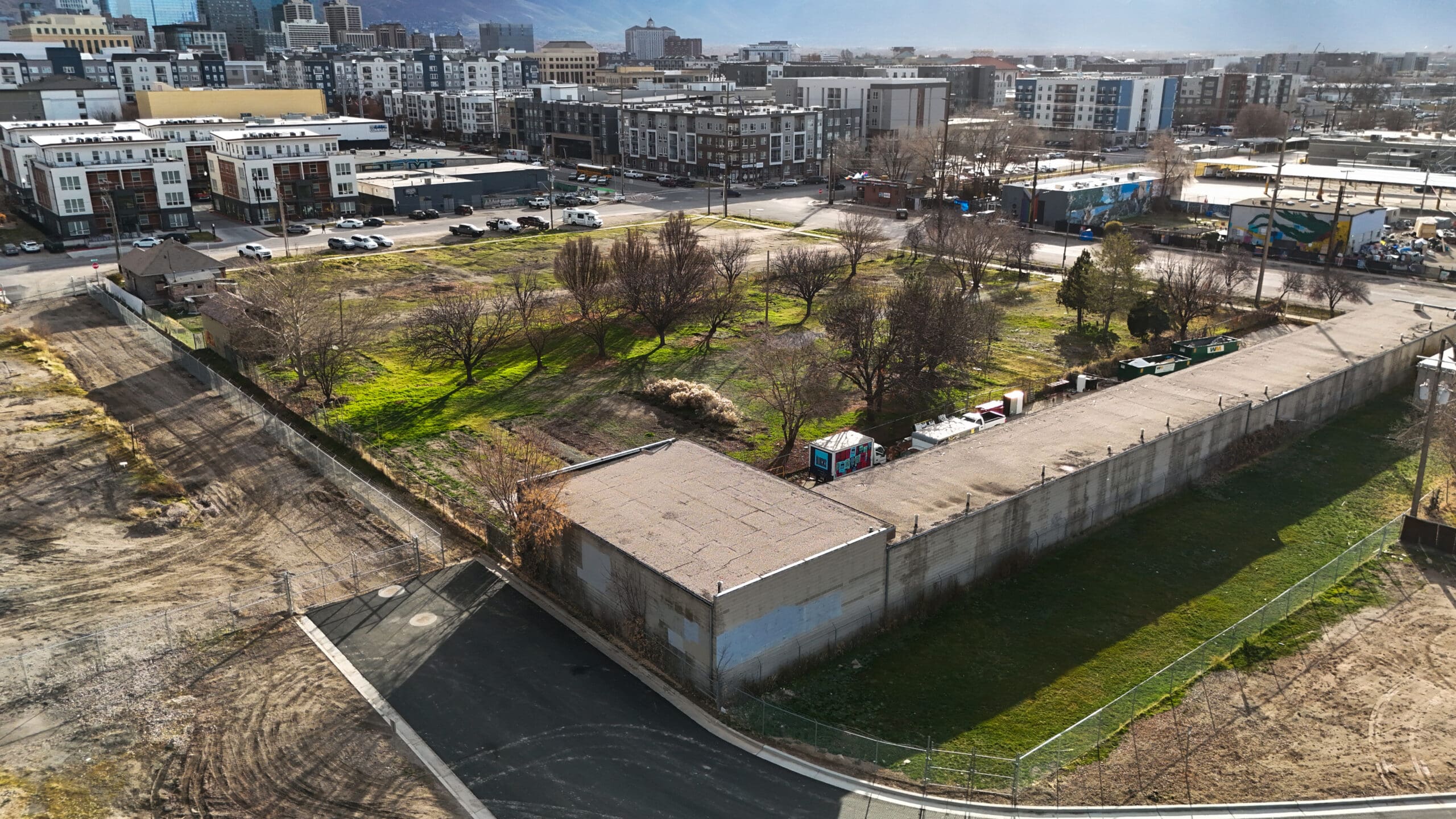
Through a deliberate, decade-long effort to assemble several parcels, the CRA created the Parry Block — a rare 2.33-acre redevelopment opportunity at the western edge of downtown Salt Lake City’s Rio Grande District.
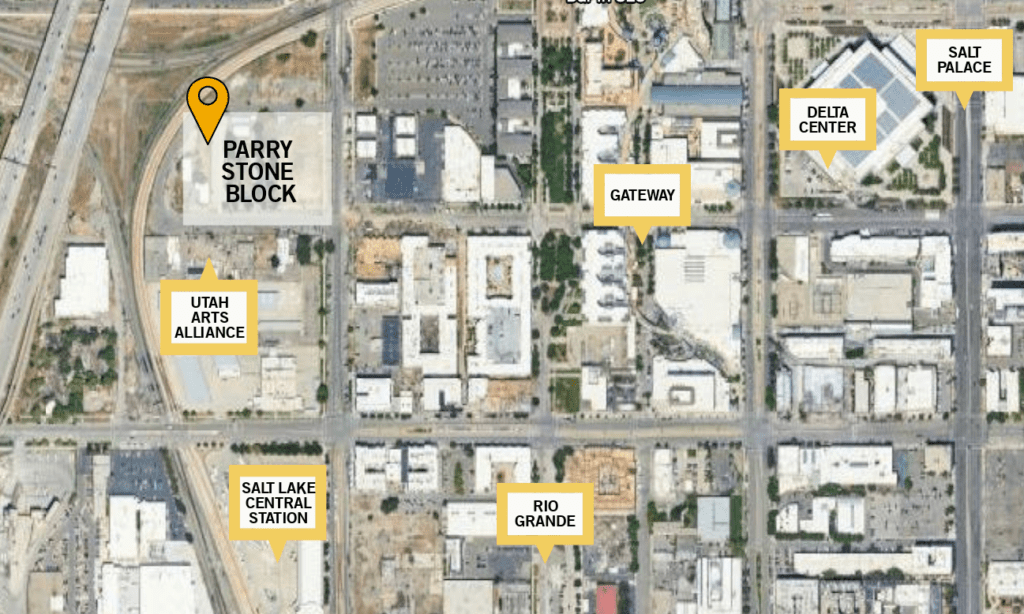
Located on 100 South between 600 West and Dansie Drive, the site is zoned Gateway Mixed Use, allowing for multifamily housing, commercial and office uses, arts and cultural space, and active ground-floor programming. Building heights in the district start at 75 feet, supporting meaningful density and a true urban development scale.
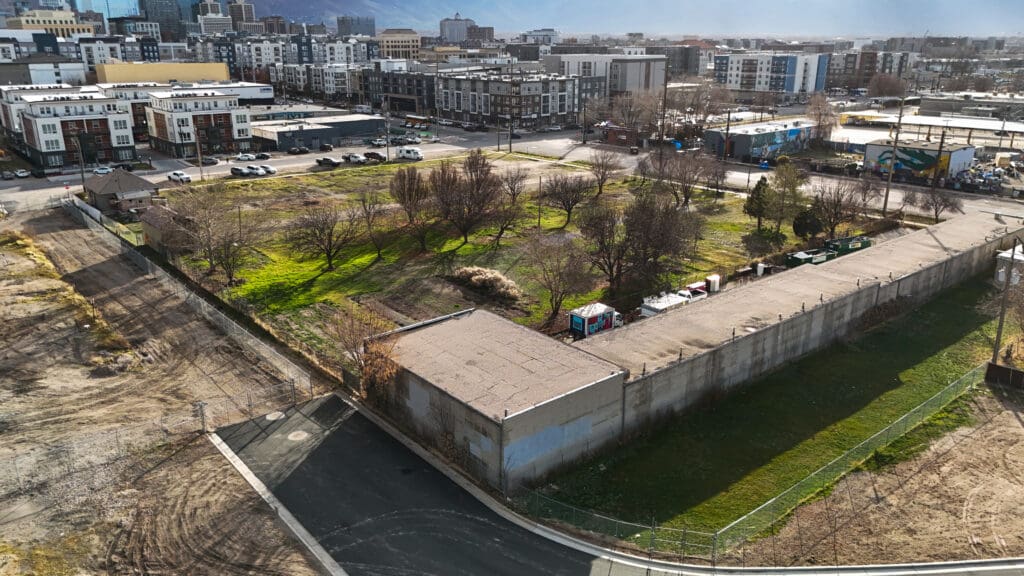
The existing home will be removed prior to closing, and the on-site storage units will remain occupied through closing, with a preference to continue operations until redevelopment. The developer will be responsible for removing storage units.
With its size, transit access, and established zoning framework, the site is well-positioned for a transformative mixed-use project in one of Downtown’s fastest-evolving areas.
Development Requirements

All proposals must include the following elements:
Arts Space
The project must include at least 10,000 square feet of net leasable, ground-floor space dedicated to arts uses. This may include studios, galleries, museums, performance spaces, or rehearsal spaces.
Housing
The project must include a minimum of 116 residential units. At least 50 percent of the units must be for-sale condominiums intended for owner occupancy.
Design
The project must reflect best practices in architecture and urban design, incorporating Crime Prevention Through Environmental Design principles.
Parking
The development must limit surface parking and reduce the visibility of parking areas and structures from public streets.
Sustainability
The project must comply with the CRA’s Sustainable Development Policy and include:
-
Building designs that achieve a Designed to Earn Energy Star score of 90 or higher
-
Participation in Salt Lake City’s Elevate Buildings energy benchmarking program once operational
-
All-electric building operation, with no on-site fossil fuel use
-
Off-site net zero energy, with 100 percent of estimated annual electricity use supplied through a utility-sponsored renewable program
Projects that achieve on-site net zero energy will receive higher consideration.
Public Art Requirement
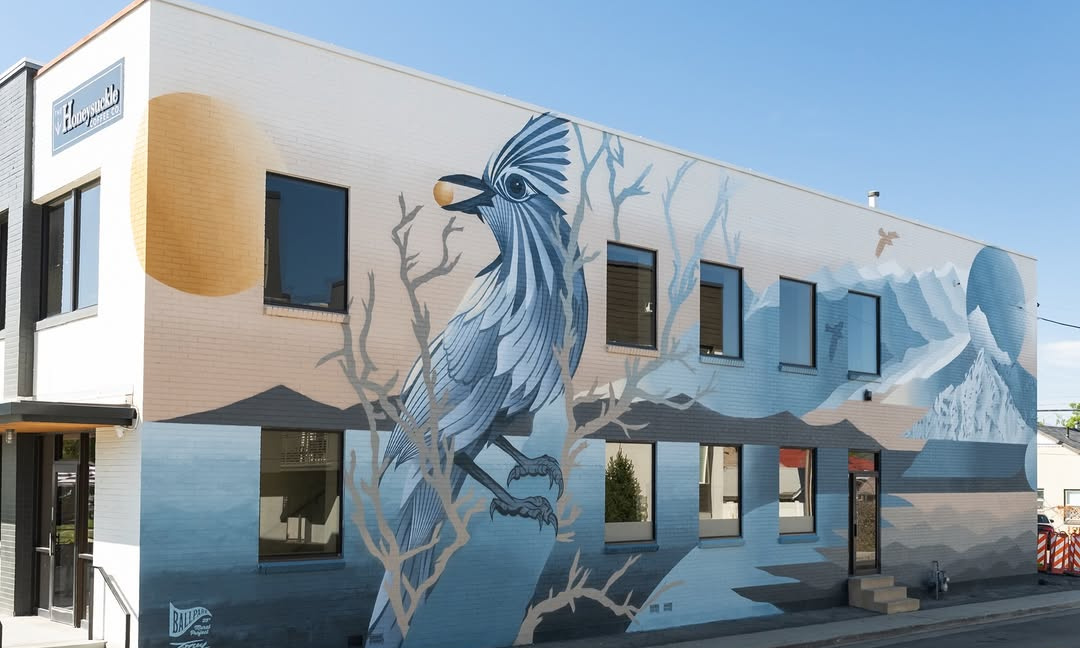
The project must include a visible art element that can be seen from a public street.
-
The art budget must equal approximately 1.5 percent of total hard construction costs
-
The developer is responsible for ongoing maintenance
-
All art installations are subject to CRA design review
-
If on-site art is not provided, the developer must contribute 1.5 percent of hard costs to the CRA’s public art fund
Development Preferences

Preference will be given to proposals that include the following:
Urban Agriculture
Partnerships with urban farming organizations or space for rooftop gardens, vertical farming, or community gardens.
Long-Term Arts Use
A commitment to providing arts space over time through long-term leases, deed restrictions, or similar tools.
Housing Mix
-
For-sale housing, including townhomes or condominiums
-
Family-sized units with three or more bedrooms
-
Starter homes priced at $450,000 or less
Project Timing
The ability to break ground within 18 months.
Enhanced Sustainability
Projects that achieve on-site net zero energy in line with the CRA Sustainable Development Policy.
How to Submit a Proposal
Proposals must be submitted electronically by email to austin.taylor@slc.gov by June 12, 2026. Paper submissions will not be accepted.
Proposals must address the items outlined below and include all required materials. Proposals may not exceed 30 pages. Additional submission requirements are provided in the formal RFP.
1. Project Description
Provide a clear description of the proposed development, including:
-
How the project meets the requirements and preferences in Exhibit C
-
The types of uses proposed and their approximate size
-
A commitment to follow the CRA Sustainable Development Policy
-
Which CRA Livability Benchmarks the project will meet and how
-
How the project complements the surrounding neighborhood and aligns with the Downtown Master Plan, Salt Lake Central Station Area Plan, and the 100 South Design Workshop
2. Design Concepts
Explain the overall design approach and include drawings that show:
-
How the project reflects best practices in architecture and urban design
-
A conceptual site plan showing building layout, circulation, parking, and major design elements
-
Conceptual elevations that show massing, materials, and building character
-
Any additional renderings or diagrams that help communicate the vision
3. Development Team Qualifications
Describe the development team, including:
-
The legal entity that would contract with the CRA and its ownership
-
Roles of development partners and key consultants
-
Key team members and their experience
-
Examples of similar past projects, including basic project details and references
-
A summary of financial capacity
-
Experience with infill or neighborhood-scale commercial development
4. Financial Model
Submit a complete financial package that includes:
-
A development budget with sources and uses
-
Construction and permanent financing assumptions
-
Equity contributions
-
A 10-year operating pro forma with revenue and expense assumptions
-
Cash flow projections
-
Return metrics, including 10-year IRR and cash-on-cash return
-
Any CRA funding requests clearly identified
5. Public Benefits
Explain how the project will benefit the community and advance public goals.
6. Marketing Approach
Describe how the project will be marketed to attract residents, tenants, and visitors to the Downtown area.
7. Neighborhood Engagement
Outline plans to engage nearby residents, businesses, and stakeholders during project planning and development.
8. Earnest Money
The selected developer must submit a $10,000 non-refundable deposit payable to the Salt Lake City Community Reinvestment Agency. The deposit will be credited toward the purchase price at closing and may only be refunded if the project fails to receive required planning approvals or if the CRA defaults.
9. Exceptions
Any requested exceptions to the RFP terms must be listed separately in an appendix labeled “Exceptions.” Exceptions should not be included in the main proposal narrative.
Informational Meeting
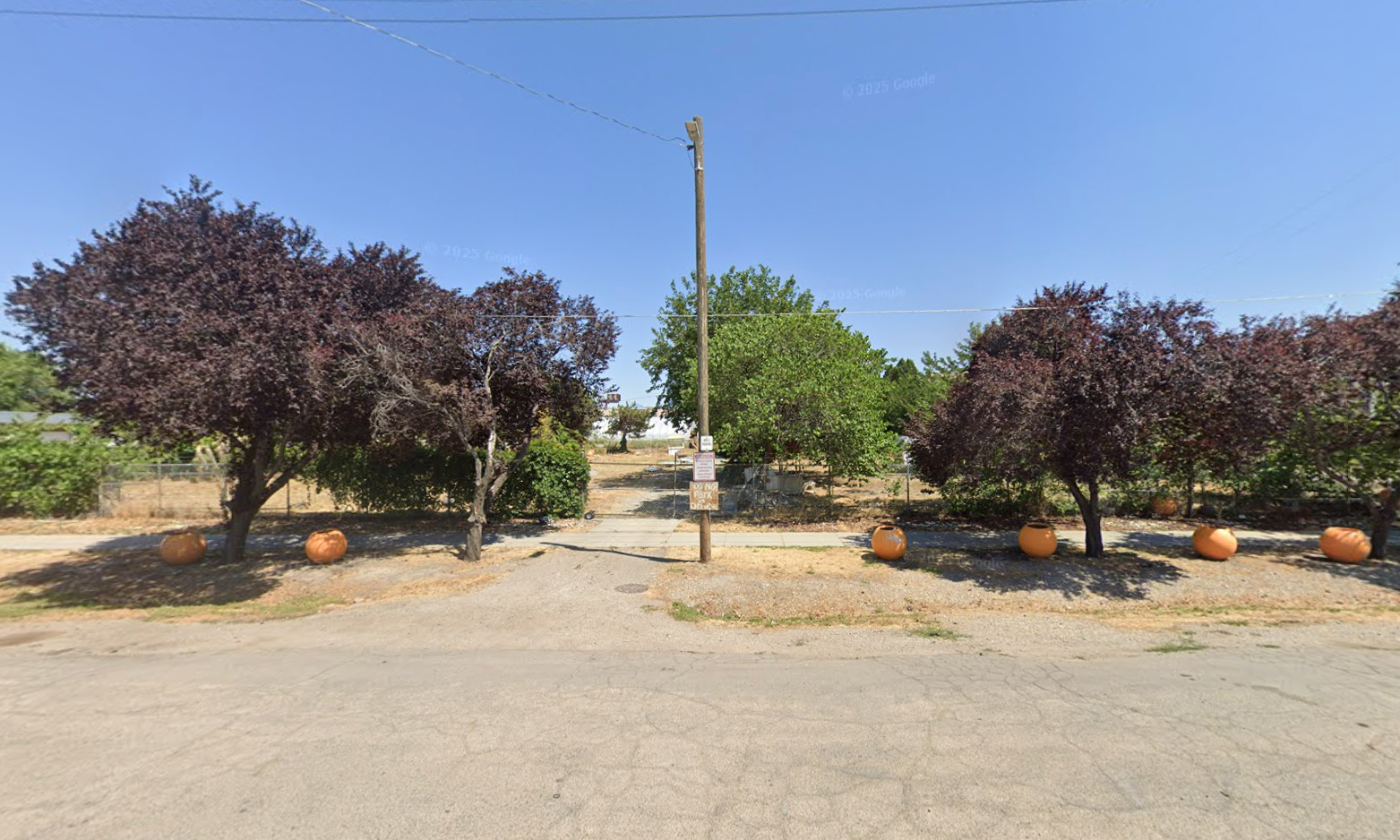
An on-site RFP Informational Meeting is scheduled to provide prospective developers with an opportunity to ask questions regarding the property and the RFP.
Date: March 30
Time: 12:00 PM
Location: 42 South 600 West, Salt Lake City
Additional questions may be submitted by email through June 5, at 5 p.m. MT. Submit questions to Austin.Taylor@slc.gov
Sale Price
The asking price for the property is $12,175,000. The site will be conveyed through a fee simple sale.
In certain cases, the purchase price may be discounted below market value to support an exceptional project that advances CRA priorities and public objectives. Any proposed discount must be supported by a financial analysis, including a gap analysis that demonstrates the necessity of the reduction for the project to move forward. Market conditions, economic trends, and the public benefits of the proposal will be carefully considered. Discounts greater than 10 percent of the appraised fair market value require approval from the CRA Board of Directors.
Developers may apply for CRA financial tools, including commercial development loans, housing development loans, wealth-building loans, and tax increment reimbursement, to help support eligible project costs and public benefits. Any requested incentives must be clearly identified in the proposal and included in the project budget and pro forma.
All CRA financial assistance is subject to separate application, evaluation, and approval under existing CRA policies and procedures. These programs are competitive, have limited funding, and are offered on a rolling basis throughout the year.
Adjacent Private Property for Sale
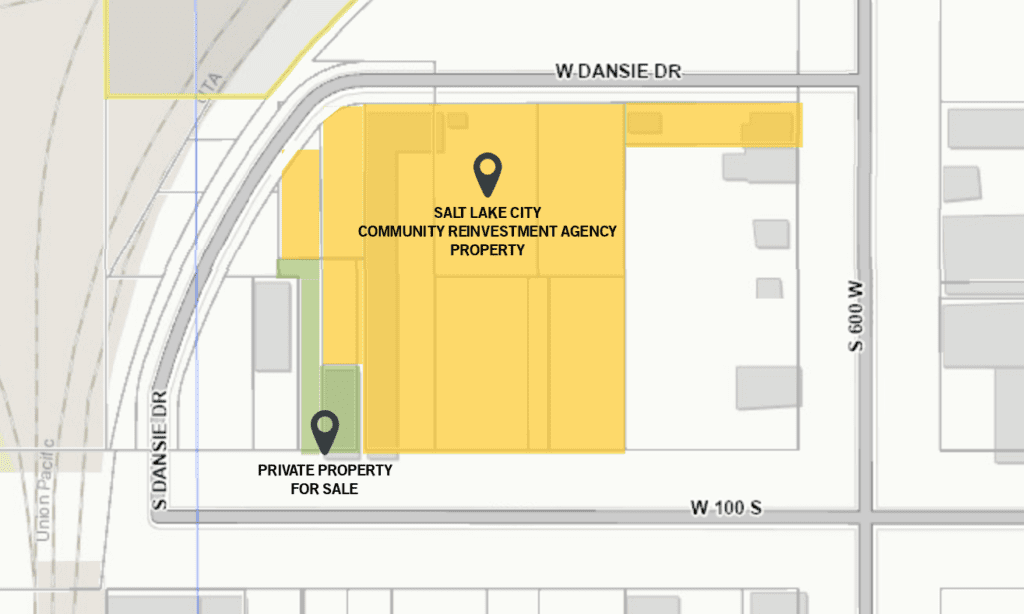
An adjacent 0.16-acre parcel, located at 654–660 West 100 South, is separately owned by Lexi, LLC, and may be available for purchase. Interested parties may contact Brett Palmer at 801-809-3574 or brett@bwpcommunications.com for additional information.
This parcel is not affiliated with the CRA, and its availability has no impact on the request for proposals or evaluation process.
Questions
Questions about the request for proposals may be submitted through the Utah Public Procurement Place website or by email to austin.taylor@slc.gov. Questions must be received by June 5, 2026, to allow time for review and response. Questions submitted after the deadline may not be answered.
Frequently Asked Questions
Yes. Proposals must incorporate the entire 2.33-acre site, which comprises 10 assembled parcels. Partial development or phased acquisition of only a portion of the site is not permitted under the RFP.
The RFP does not prohibit phasing; however, proposals must present a cohesive and comprehensive development plan for the entire site. Any proposed phasing should clearly demonstrate how interim conditions will be managed, including access, parking, and site activation.
Gateway Mixed Use zoning permits a diverse range of residential, commercial, office, and arts uses. While 75 feet is the starting height, additional height may be achievable depending on design, massing, and compliance with zoning standards and CRA design review. Developers should confirm assumptions through the City’s Development Review Team process.
The CRA does not guarantee zoning variances or amendments. Proposals should be designed to comply with existing Gateway Mixed Use zoning. Any requested deviations should be clearly identified and justified.
The project must include:
-
A minimum of 116 residential units
-
At least 50 percent for-sale condominiums
Beyond that, there is flexibility in unit mix, configuration, and pricing. Projects that include family-sized units or starter homes priced at $450,000 or less may receive additional consideration.
Affordable housing is not explicitly required, but projects that incorporate affordability, wealth-building opportunities, or mixed-income models may score higher under the CRA’s Livability Benchmarks.
Arts space must be:
-
Located on the ground floor
-
At least 10,000 net leasable square feet
-
Suitable for active arts uses such as studios, galleries, performance, rehearsal, or exhibition space
The CRA places value on the visibility, accessibility, and long-term viability of arts uses.
Sustainability requirements are a core component of the project and are not optional. At a minimum, projects must:
-
Be all-electric
-
Achieve Designed to Earn Energy Star 90+
-
Participate in Elevate Buildings
-
Meet off-site net zero energy standards
Projects that exceed these standards, particularly those with on-site net-zero energy, may be scored more favorably.
The CRA is not a lender of last resort but may provide gap financing or incentive tools for projects that deliver public benefits. Any CRA funding:
-
Requires a separate application
-
Is competitive
-
Is subject to CRA policies and approval timelines
Developers should not assume CRA funding as a guaranteed source.
The CRA will remove the existing home at 42 South 600 West before closing. The developer is responsible for the demolition of the storage units and all other site preparation costs
Environmental site assessments are included as part of the RFP exhibits. All property is sold as-is, and developers are responsible for conducting their own due diligence.
If the selected developer fails to execute a purchase and development agreement within six months, the CRA may:
-
End the exclusive negotiation period
-
Re-bid the property
-
Consider another proposal
Yes. Submitted proposals are subject to public records laws, except for information that qualifies as protected under GRAMA.